Our Story

A practice carried down the valley

Stato‑dynamic yoga holds the still and the moving in one breath. What follows is how the hub came to be — the teachers, the houses, the hills, and the students who kept returning.

Foreword
Yogi Atmaprakash, Stato-Dynamic Yogshala, Lakeside, Pokhara
Yogi Atmaprakash — Stato‑Dynamic Yogshala, Lakeside, Pokhara 6

“There’ll be shadow beneath each lamp.”

A dedication

The Priest of Life

With a brief scroll on my touch screen (mobile phone), there appears a title, “Famed butterfly Researcher Putali Baje dies”. It was published by a famed National Daily.

Over the title, a photograph was printed of a British‑born late Mr. Colin Philip Smith wearing a Nepali Cap (Dhaka Topi). This white man (Kuire) had arrived in Nepal some fifty years ago as a teacher under the United Mission and worked in Gorkha, Kathmandu, and Pokhara. After doing extensive research on butterflies (Nepali name PUTALI), he was honored with citizenship by the Government of Nepal.

Not only we can still observe the vast collection of butterflies but also some other wild species as good as dead in the museum called “Annapurna Natural History Museum” which was established in 1965 A.D. by American Peace Corps inside the premises of Prithvi Narayan Campus which itself was established on 1960 A.D. in Pokhara.

A little controversial is the issue of USAID, which contributes a huge amount of money in conservation of endangered species. Certainly, we can find many such species within the collection of the aforementioned museum. But dead.

One can easily cherish the sight of these poor ones but it had been a conflict of interest if studied retrospectively.

Now, we should come to the real story to whom this book is dedicated towards.

As a child was born in the location of Nepal, Pokhara 11, Fulbari (English Name ‘Garden’), this boy grew up and at a certain time, he went to Benaras (India) for his studies. After completing his studies returned to his homeland.

Thereafter, he created a kind of Ashram in Pokhara 20, Bhalam (then V.D.C.2) popularized as Bahirabari Bagaicha (english name – Garden), and remained active there. We even find some contemporary people like Dr. Jagman Gurung describing this awesome GURU, also a medicine man (Ayurvedic doctor). We further find some people claiming the Swami was occasionally welcomed in the Narayanhiti Palace for PURAN VACHAN (mythological storytelling).

But as the saying goes by “there’ll be shadow beneath each lamp”, this awesome Swami developed an addiction towards liquor. Slowly this habit caused deterioration in his health. So he had to be shifted to a more ‘urbanite’ section of Pokhara 5, Parsyang. Then ultimately he rested permanently or died there.

Although still the issue of Swami’s birth place and date is debatable, he had died in Gandaki Regional Hospital in year 2033 B.S.

Even though there was nearly a year‑long gap between his death and my birth, as in my childhood I used to visit this ‘Ashram’ in Bhalam nearly regularly. We, a group of few local kids used to pay visit to steal any fruits that were available in this garden (BAGAICHA). Varieties like lichhy (Litchi chinensis), chiuri (Diploknema butyracea), guava (Psidium guajava), peach (Prunus presica), plums (Prunus domestica), Kafal (Myrica esculanta), haluwabedh (Diospyros kaki), Amala (Phyllanthus emblica) etc could be found.

There certainly were many species of flowers and herbs. But as any other normal kids, we were only interested in the edible fruits.

And with the arrival of the intermediate season between rainy & autumn, we could see uncountable varieties of butterflies flapping their wings. It was really a sight of dancing rainbows. Among them, I particularly preferred the ‘leaf‑shaped’ (Kallima inachus) for existential camouflage.

But alas! I used to kill the manifold of butterflies using the long branches of LALUPATE (Euphorbia pulcherrima) or the stems of maize (Zea mays).

Now as I remember my cruel past, I’ve named myself as ‘a priest of death’. After the passing away of Swamiji, there have been twists and turns in events concerning the Ashram. The shape and quality of the Ashram have been deteriorating until a novice and a student of him have begun to develop this place. In about 40 years, this Ashram has been worsening since.

Being present continuously around and in ‘SAIDEV SADHANA KUTIR’, established by this student, Puran Pragya Mohan Sairam has constructed and established an Ashram since B.S. 2075, Asar 11. On various occasions, there have been numerous programs conducted in the Ashram. Several dignitaries in spirituality and many lay people have been participants in the evolution or development of this place.

So, here we can see the stark contrast between our Swamiji and Mr. Colin Philip Smith. With the former having the title of a ‘Priest of Life’ and the latter as another ‘priest of death’.

Truly late Swami Devanand should be honored with ‘double citizenship’ and HE deserves to be addressed as Putali Baje.

Now concluding these memories we heartfully offer our blissful wishes for the bright future of this ‘Saidev Sadhana Kutir’.

Sharad K.C.

नमो गुरुभ्यो गुरुपादुकाभ्यो, नमः परेभ्यः परपादुकाभ्यः ।
आचार्य सिद्धेश्वर पादुकाभ्यो, नमो नमः श्री गुरुपादुकाभ्यः ॥

स्वामी श्री १०८ देवानन्द गिरिजी महाराजको ४७ औं ब्रह्मलीन दिवसको उपलक्ष्यमा प्रकाशन हुन लागेको स्मृति संग्रहको सफलताको कामना गर्दछु ।

श्री मोहन जी. सी., पोखरा २० खोरप्यारे, भलाम

The Timeline

1998

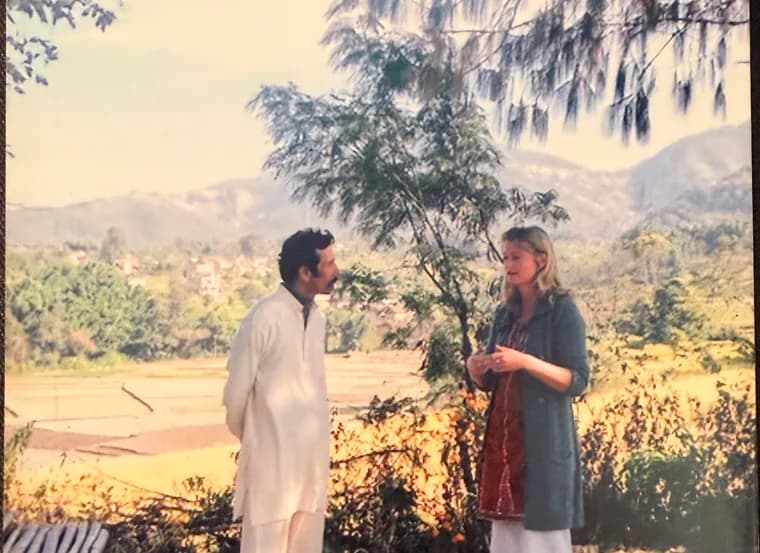
The first conversation, above the terraces

Chapter One

A meeting in the valley

Two teachers meet on a rice terrace outside Kathmandu and find they are describing the same practice in two languages — one of stillness, one of movement.

2003
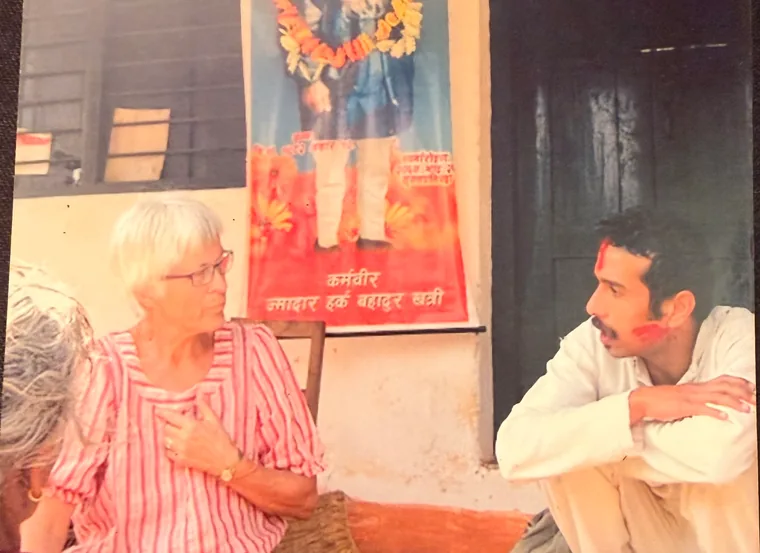
Long afternoons of asking questions

Chapter Two

Learning at the source

Years spent sitting with elders in courtyard houses, writing down what was never written down — breath counts, sequences, and the reasons behind them.

2009
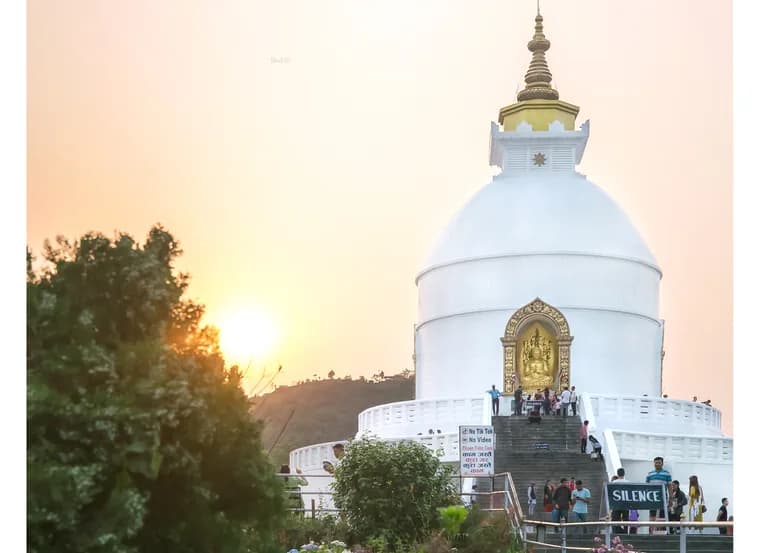
World Peace Pagoda, above Pokhara

Chapter Three

The first retreat

Nine students, one borrowed hall, ten days of silence broken only by bells. Everyone asked when the next one would be before the last one had ended.

2016
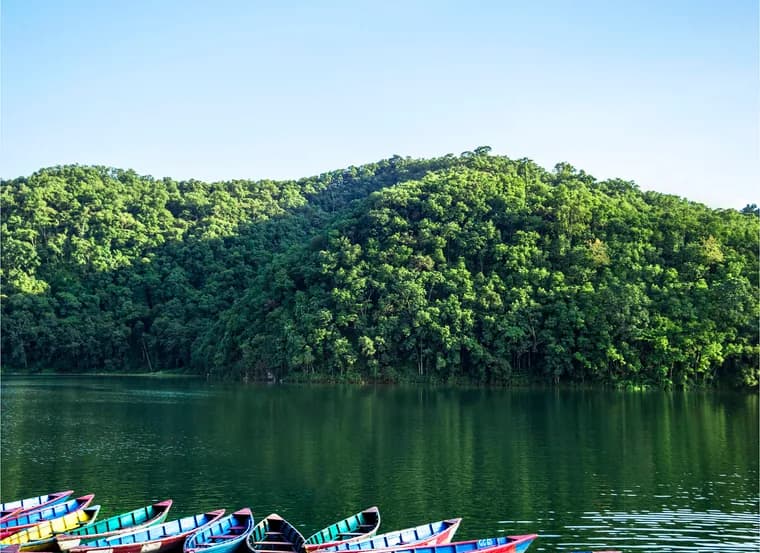
Lakeside, Pokhara — the second home

Chapter Four

Beyond Kathmandu

Retreats move out to the lake and the hills. Rooms become part of the practice — simple beds, local food, mornings that begin before the boats do.

2020
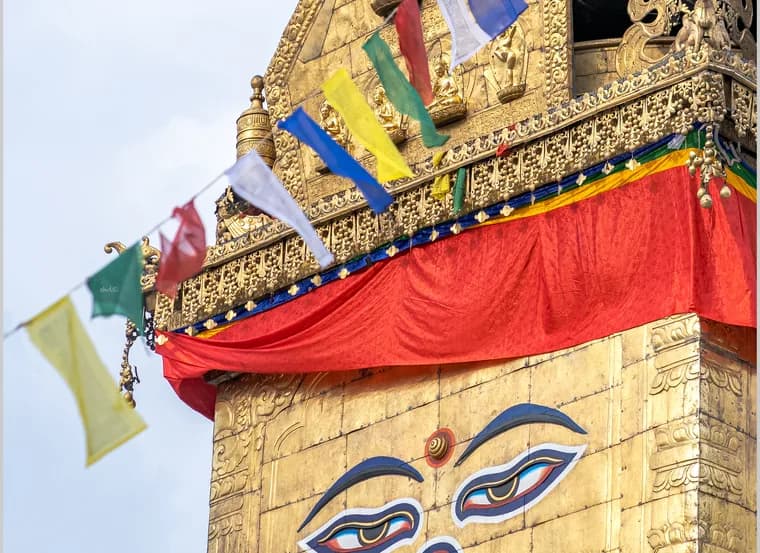
Swayambhunath — the eyes stayed open

Chapter Five

Stillness, tested

The quiet years. Classes went online, teachers stayed put, and the practice proved it needed nothing but a floor, a breath and attention.

Today

Our hosts, still welcoming every arrival

Chapter Six

The hub, today

One house, two retreat seasons, and a small circle of teachers who trained here and never quite left. The door is open; the kettle is usually on.

27

Years of practice

64

Retreats held

31

Countries visited us

“Hold the posture until it stops being a posture. What remains is the practice.”

— A teaching we were given, and now pass on

Join UsExplore Retreats